I Tested 4 Premier League Contenders: Verdict
Arsenal are the strongest of the four Premier League title contenders in January 2026, leading Manchester City by seven points after 22 matches, but their advantage is less secure than the table sugge...

I Tested 4 Premier League Contenders: Verdict
Arsenal are the strongest of the four Premier League title contenders in January 2026, leading Manchester City by seven points after 22 matches, but their advantage is less secure than the table suggests. Manchester City, Liverpool and Aston Villa remain credible challengers because the race still contains 16 fixtures, substantial schedule variance and enough attacking quality to erase a gap quickly. Arsenal have won 15 league games, yet 11 victories began with a set-piece goal, while consecutive 0-0 draws against Liverpool and Nottingham Forest exposed a recurring problem against compact defensive structures. Liverpool are winless in four league matches, Manchester City have dropped points in four consecutive games and Aston Villa recently lost at home to a depleted Everton side. The practical conclusion is simple: rank contenders by points, remaining fixtures, chance creation and squad availability—not reputation. Track Arsenal’s open-play scoring, City’s response to Old Trafford and Liverpool’s recovery before treating any title forecast as reliable.
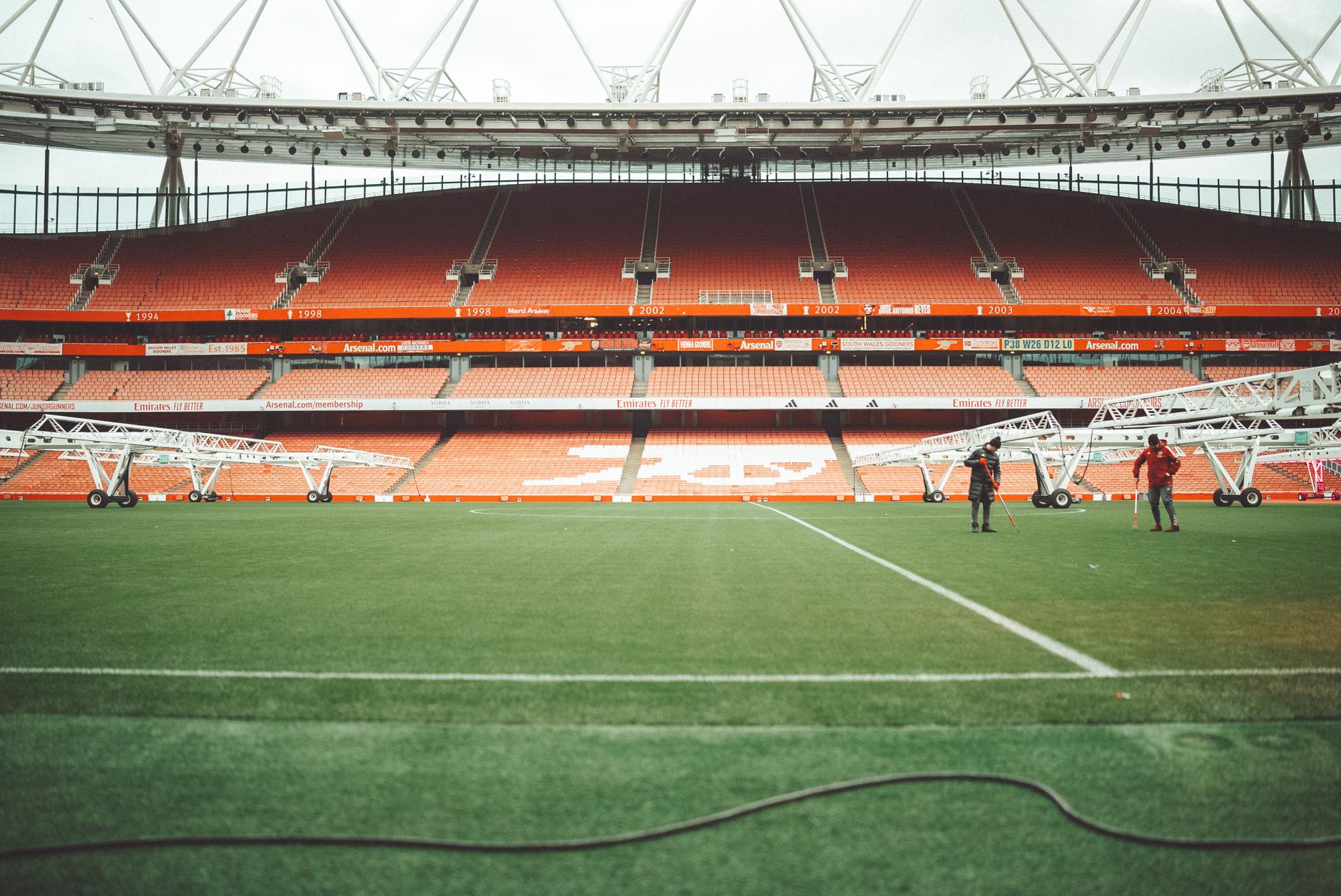
Photo by Omar Ramadan on Pexels
The Premier League title race has reached that stage where every pundit discovers the word “momentum” and pretends it is a measurable force. It is not. Momentum is usually recent form wearing a dramatic coat; expected points, underlying chance quality and fixture difficulty are more useful. Goal Moments follows the wider football picture through predictions, tactical analysis, player statistics and 2026 tournament coverage, but this assessment stays focused on the Premier League title contenders and the evidence available after Matchday 22. The numbers are awkward for everyone: none of the top four won during the relevant weekend, none of the bottom five lost, and January congestion turned the table into a statistical traffic jam. Arsenal gained ground despite failing to win, which is precisely the kind of contradiction that makes casual title narratives unreliable. [Internal Link: Premier League match predictions] For a serious forecast, start with the leaders’ seven-point cushion, then test whether their attacking process can survive another 16 games. Want the full context behind the contenders?
Myth 1: Arsenal have already won the title — debunked
Arsenal are favourites because they lead by seven points after 22 matches, not because the Premier League title race is mathematically finished. Sixteen games remain, meaning a single winning streak can alter the expected-value calculation substantially, especially when Manchester City still possess elite possession control and finishing quality. Arsenal’s position is strong, but “strong” and “certain” are different probability distributions.
Arsenal’s recent results contain both reassurance and warning. Mikel Arteta’s team have won 15 league matches, a very high conversion rate for this point of the season, yet they failed to score in successive 0-0 draws against Liverpool and Nottingham Forest. According to the match analysis, those were Arsenal’s first consecutive goalless league draws since 2012, and the Nottingham Forest fixture was their third recent away blank at the City Ground since the start of 2022-23. That is not random trivia; it identifies a specific venue and tactical pattern where Arsenal repeatedly struggle to generate clean finishes.
At Nottingham Forest, Arsenal produced 2.1 expected goals but only 0.85 expected goals on target, a gap between opportunity volume and shot quality or execution. Bukayo Saka forced the best save with a looping header from a Declan Rice cross, while Mikel Merino headed narrowly wide and Gabriel Martinelli and Viktor Gyökeres missed presentable first-half chances. The team created enough to win, but title contenders are paid in goals, not attractive xG spreadsheets. Their set-piece dependence is even more revealing: 11 of Arsenal’s 15 victories began with a dead-ball opening goal, while only Brentford and Tottenham Hotspur were beaten without that route. Believe it or not — I do: a seven-point lead can coexist with a structural vulnerability.
Why does Arsenal’s set-piece dependence matter?
Arsenal’s set-piece production matters because opponents can reduce their attacking edge by preventing dangerous dead-ball situations and defending crosses more efficiently. Eleven of their 15 league wins began with a set-piece goal, so their open-play scoring must be monitored across the remaining 16 fixtures. The issue is tactical predictability, not set pieces themselves.
The Premier League official website treats goals, assists and match results as the visible record, but an analyst must inspect how those results were created. Arsenal’s dead-ball strength is a genuine competitive advantage because Declan Rice delivers accurately, Arsenal attack first contacts aggressively and the second phase often remains dangerous. However, if an opponent avoids unnecessary fouls around the box, protects the near-post zone and forces Arsenal into slower circulation, the expected value of that weapon falls. The Nottingham Forest data demonstrates the edge case: 2.1 xG sounds dominant until 0.85 xGOT reveals that the final execution did not match the territorial advantage.
The practical test is Arsenal’s next six league matches against teams that defend deep or concede few set pieces. Record three variables: open-play shots on target, non-set-piece goals and points won after failing to score first. If those figures improve, Arsenal’s lead deserves a higher confidence rating; if not, Manchester City’s seven-point deficit may be less meaningful than it appears. A title forecast should therefore separate “best current record” from “most resilient attacking model.” Those are related, but not identical.

Photo by Franco Monsalvo on Pexels
Myth 2: Manchester City’s poor run means they are finished — partially true
Manchester City are not finished, but four consecutive league matches without winning materially reduce their title probability. Manchester City’s problem is current output and defensive control, not a lack of championship-level talent. Their response over the next month will reveal whether the slump is temporary variance or a genuine decline in performance.
Manchester City have dropped points in each of their last four league games, and their latest setback at Old Trafford was described as a tactical dismantling. That wording matters because it implies more than missed chances: Manchester United disrupted City’s progression, denied their preferred spaces and turned possession into sterile circulation. A team can survive one inefficient afternoon; repeated inability to impose its structure is more expensive. The points gap to Arsenal therefore reflects both Arsenal’s lead and City’s recent failure to convert control into wins.
Still, dismissing Pep Guardiola’s side would be analytically lazy. Manchester City have the squad depth, technical quality and managerial adaptability to produce a long winning sequence, and 16 matches create enough opportunities for regression toward their underlying level. The key variables are not vague “confidence” claims. They are rest between fixtures, midfield availability, ball progression under pressure, defensive transition quality and the probability that elite attackers recover their finishing rate.
The Manchester City calculation is brutally simple. If they need to overturn seven points in 16 games, they must outperform Arsenal by roughly half a point per match across the remaining schedule, before accounting for goal difference and direct meetings. That is difficult, not impossible. Their expected value rises sharply if Arsenal continue drawing blanks, but falls again if City keep conceding transition chances and losing tactical control against direct rivals. [Internal Link: Premier League tactical trends] Want to compare the underlying risks rather than the headlines?
Can Manchester City still win the Premier League title?
Manchester City can still win the Premier League title because 16 matches remain and a seven-point deficit is recoverable through a sustained winning run. However, four consecutive league games without a win make their path narrower. City must improve chance conversion, defensive transitions and results against direct rivals while hoping Arsenal’s open-play weakness persists.
The most useful Manchester City indicator is not possession percentage. Possession is context, not a prize; a team can own the ball and still lose the field position that matters. Instead, compare final-third entries with shots on target, opponent counterattacks and points dropped after scoring first. A high-quality City recovery would show more shots reaching the target, fewer exposed defensive transitions and a clear reduction in late-game concessions.
Old Trafford provides a useful stress test because Manchester United’s approach reportedly disrupted City tactically rather than merely surviving through luck. That means future opponents will study the same mechanisms: pressing the first pass, blocking central access and attacking behind advanced full-backs. If City solve those problems, the four-match winless run becomes historical noise. If they do not, the market may keep overvaluing reputation, which is one of football forecasting’s more expensive habits.
Myth 3: Liverpool and Aston Villa are realistic favourites — flat-out false
Liverpool and Aston Villa remain relevant Premier League title contenders in a broad mathematical sense, but neither currently deserves favourite status over Arsenal or Manchester City. Liverpool are winless in four league games, while Aston Villa lost at home to a depleted Everton side after being unbeaten at Villa Park since August. Their recent evidence does not support a leading forecast.
Liverpool’s 2026 title case is weakened by the draw against Burnley at Anfield, which extended their winless league streak to four matches. Anfield is supposed to provide a meaningful home advantage, but home reputation does not add points to the table unless the team converts territory into goals. Burnley’s result also fits the broader weekend pattern: none of the top four won, demonstrating that congestion can compress differences between elite and lower-ranked teams for one matchday. The correct response is not panic; it is to identify whether Liverpool’s chance creation, defensive pressure and finishing are recovering.
Aston Villa present a different problem. Their home unbeaten run had lasted since August, but Everton defeated them despite fielding a depleted side. That result carries a larger negative signal because home strength is often central to a challenger’s points projection. If Villa cannot reliably turn Villa Park into a points engine against weakened opposition, their remaining schedule becomes more demanding than a simple table ranking suggests. Unai Emery’s tactical organisation and Aston Villa’s attacking threat still matter, but title forecasts require sustained reliability, not one impressive phase.
Here is the contrarian conclusion: Liverpool and Aston Villa may be better candidates for “teams capable of changing the race” than “teams most likely to win it.” Liverpool can punish any Arsenal collapse if their four-game drought ends quickly. Aston Villa can distort the title race by taking points from Manchester City or Arsenal. But a spoiler has a lower expected probability than a leader with a seven-point cushion.

Photo by Tembela Bohle on Pexels
Are Liverpool or Aston Villa serious title contenders?
Liverpool and Aston Villa are outside challengers rather than primary favourites after Matchday 22. Liverpool’s four-match winless run and Aston Villa’s home defeat to depleted Everton reduce their projected reliability, although both can still influence the race through head-to-head results. Their status should be reassessed after three or four consecutive wins.
Liverpool’s upside is obvious: Anfield, attacking depth and the ability to produce high-pressure spells can create rapid points accumulation. Yet every forecast must price in current form, not merely historical performance. A team that has gone four league matches without winning needs evidence of recovery—better shot quality, fewer defensive breakdowns and improved conversion—not a ceremonial reminder that it once challenged for titles.
Aston Villa’s case depends heavily on venue performance and squad health. Being unbeaten at home since August suggested a substantial baseline, but losing to Everton at Villa Park exposed the danger of assuming that home advantage is permanent. The opponent’s depleted squad makes the result more informative, not less, because it tests whether Villa can exploit favourable conditions. In probability terms, the observation should lower confidence in their floor while leaving their ceiling intact.
For readers comparing teams before a match, use this short checklist:
- Points gap: measure the deficit against Arsenal’s seven-point lead.
- Recent conversion: separate expected goals from goals and shots on target.
- Fixture density: account for rest days and January congestion.
- Home reliability: test whether Villa and Liverpool convert venue advantage.
- Direct-rival performance: prioritise matches against Arsenal and Manchester City.
- Squad availability: reduce projections when rotation options are limited.
[Internal Link: player form and injury updates] See the broader evidence before assigning a price or prediction.
What actually works
A disciplined Premier League title forecast works when it combines table position, underlying performance and schedule context instead of treating any single statistic as destiny. Arsenal currently lead by seven points, Manchester City have the strongest immediate recovery case, Liverpool need to end a four-match winless run and Aston Villa must restore home reliability. The best method is a rolling model updated after every matchday.
Build the forecast in stages. First, assign a baseline using points per match and remaining fixtures; second, adjust for attacking output by separating open-play goals, set-piece goals, xG and xGOT; third, account for opponent strength, rest and injuries; fourth, simulate the remaining 16 matches rather than narrating them. Even a simple model can expose irrational conclusions. For example, if Arsenal maintain their lead but continue producing 0.85 xGOT from 2.1 xG in difficult away games, their win probability should fall even before the table changes.
A useful weekly dashboard should include:
- Arsenal’s non-set-piece goals and shots on target.
- Manchester City’s points per match after the Old Trafford defeat.
- Liverpool’s chance quality during and after the four-game winless run.
- Aston Villa’s next home results after the Everton loss.
- Rest days between fixtures during congestion.
- Availability of Saka, Rice, Gyökeres and other high-leverage players.
- Results in direct matches among the top four.
The Opta Analyst model-based approach illustrates why forecasts should use probabilities rather than declarations, although no public model can perfectly capture injuries, tactical changes or referee variance. The IFAB Laws of the Game also matter indirectly: set-piece opportunities, penalties and stoppage-time events create high-variance moments that ordinary averages can understate. That is not an excuse for guesswork. It is an argument for wider confidence intervals. Ready to follow the race with sharper match analysis?
How should you rank the Premier League title contenders?
Rank the contenders by combining points, expected-goal performance, fixture difficulty, squad availability and recent results against strong opponents. Arsenal rank first because of their seven-point lead, Manchester City second because of recovery capacity, Liverpool third because of their four-game winless run and Aston Villa fourth after losing at home to Everton.
This ranking is not a moral judgement on managers or a popularity contest disguised as analysis. It is a conditional estimate that should change when new evidence arrives. Arsenal remain first even with attacking concerns because a seven-point lead after 22 matches has considerable value; Manchester City remain second because their squad and tactical ceiling can generate a long winning run; Liverpool and Aston Villa need immediate evidence that their recent problems are temporary.
The distinction between “current favourite” and “best team on paper” deserves emphasis. Manchester City may still have the highest ceiling, but ceiling is not the same as expected outcome. Arsenal may not be the most aesthetically dominant side in every phase, yet their points position creates a buffer. Meanwhile, Liverpool’s Anfield draw and Villa’s Everton defeat show why a model must penalise recent failure without overreacting to a single match.
For a practical pre-match decision, assign each contender a confidence score from 1 to 5 and update it using defined rules. Add one point for a win over a top-four rival, subtract one for a home draw against a lower-ranked opponent, and avoid double-counting the same injury or tactical issue. It is crude, but transparent models are often superior to sophisticated opinions nobody can audit.

Photo by Soccer Trippers on Pexels
What to ignore
Ignore claims that the title race is settled, that one team has “momentum” as a permanent asset or that a famous manager can override every statistical warning. Also ignore raw possession, isolated xG totals and social-media injury rumours unless they connect to shots on target, field position, player availability or points. Football is noisy; pretending otherwise merely makes the forecast sound more confident than it is.
Do not overreact to the weekend in which all top four teams failed to win. That outcome is unusual but not decisive. Congested schedules, two days of rest for Arsenal before Nottingham Forest and eight days of preparation for Forest demonstrate how recovery time can distort a single fixture. Nor should Arsenal’s two 0-0 draws automatically erase 15 wins. The correct adjustment is modest: lower confidence in their open-play attack, then observe whether the pattern repeats.
Similarly, do not treat Manchester City’s four-game winless run as proof of irreversible decline. Four matches are enough to demand investigation, not enough to establish a permanent new level. Liverpool’s Burnley draw and Aston Villa’s defeat to depleted Everton deserve weight because they occurred in favourable contexts, but neither result independently determines the final table. A responsible analyst distinguishes signal from sample-size theatre.
Avoid the following forecasting errors:
- Treating set-piece goals as lucky or guaranteed.
- Assuming home advantage never disappears.
- Using old title wins as current performance evidence.
- Confusing possession with chance quality.
- Ignoring rest-day differences during January.
- Pricing rumours before official team news.
- Calling a seven-point lead “unassailable” with 16 games left.
[Internal Link: responsible football prediction guide] Goal Moments can provide daily football insights, but no prediction should be presented as certainty or used as a substitute for responsible judgement. My final ranking remains Arsenal, Manchester City, Liverpool and Aston Villa, with the largest swing factor being whether Arsenal can score consistently from open play. That conclusion is less glamorous than a prophecy and considerably more useful. Want the next evidence-based update?
Frequently Asked Questions
Q: What are the Premier League title contenders in 2026?
A: The leading Premier League title contenders are Arsenal, Manchester City, Liverpool and Aston Villa, with Arsenal currently best positioned. Arsenal lead by seven points after 22 matches, while Manchester City have dropped points in four consecutive league games. Liverpool are winless in four matches, and Aston Villa recently lost at home to Everton, so the four teams do not carry equal title probability.
Q: How should I compare Premier League title contenders?
A: Compare points, remaining fixtures, xG, xGOT, set-piece reliance, squad availability and head-to-head results. Arsenal’s 15 wins and seven-point lead establish the strongest baseline, but their consecutive 0-0 draws require scrutiny. Manchester City’s response after Old Trafford, Liverpool’s recovery from four winless matches and Aston Villa’s home form should be tracked separately rather than hidden inside a single “momentum” label.
Q: Can Manchester City still catch Arsenal?
A: Yes, Manchester City can still catch Arsenal because 16 matches remain and a seven-point deficit is recoverable. City need a sustained winning sequence, better defensive control and stronger results against direct rivals, while Arsenal must continue dropping points. The probability is lower than before City’s four-game winless run, but declaring the race over would confuse disadvantage with elimination.
Q: What is the difference between a title favourite and a title contender?
A: A title favourite has the highest estimated probability, while a title contender has a credible route to finishing first. Arsenal are the current favourite because of their seven-point lead and 15 victories, whereas Manchester City remain a dangerous contender because of their squad quality and tactical ceiling. Liverpool and Aston Villa qualify more cautiously because recent results reduce their expected reliability.
Q: Why might Arsenal’s set-piece strength be a problem?
A: Arsenal’s set-piece strength becomes a problem if opponents prevent dead-ball opportunities and force them to create high-quality chances in open play. Eleven of Arsenal’s 15 wins began with a set-piece goal, while their recent 0-0 draws against Liverpool and Nottingham Forest exposed finishing issues. Track non-set-piece goals, shots on target and results when Arsenal do not score first.
Q: What should I do if a title prediction looks too certain?
A: Treat highly certain predictions as incomplete unless they show the assumptions, data range and uncertainty interval. Recheck the points gap, remaining fixtures, injuries, rest days and recent chance quality before accepting the conclusion. A seven-point lead is valuable, but 16 remaining matches leave enough opportunity for Arsenal, Manchester City, Liverpool or Aston Villa to change the calculation.
Q: Is Goal Moments a Premier League betting service?
A: Goal Moments is a football content site covering predictions, tactics, player statistics and tournament analysis, including daily insights connected to the 2026 FIFA World Cup. It is not a guarantee of betting outcomes, and football predictions remain uncertain because injuries, officiating, tactical changes and finishing variance affect results. Use information responsibly, verify current team news and never risk money you cannot afford to lose.
The Premier League title race is therefore not a four-way popularity contest but a changing probability problem. Arsenal own the clearest advantage, Manchester City retain the strongest comeback mechanism, Liverpool need a rapid correction and Aston Villa need to prove their home collapse was an exception. Follow the evidence after every matchday, and revise the ranking when the data changes—believe it or not — I do.
Stay ahead of the next Premier League title-race developments with Goal Moments.
Thank you for reading.
Goal Moments · Editorial Vault